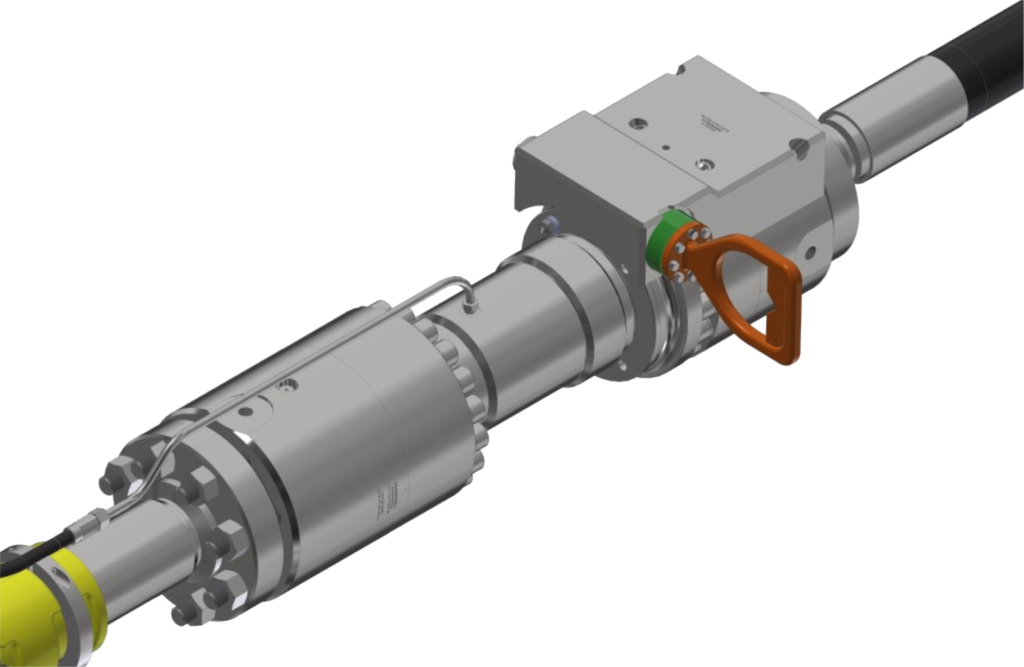
Hydraulic (active) Disconnection
- Home
- Hydraulic (active) Disconnection
Product overview
All Flint Subsea Emergency Quick Disconnect devices are supplied with the capability to perform active release. Active release is achieved by pumping hydraulic fluid into the connector through the hydraulic release port.
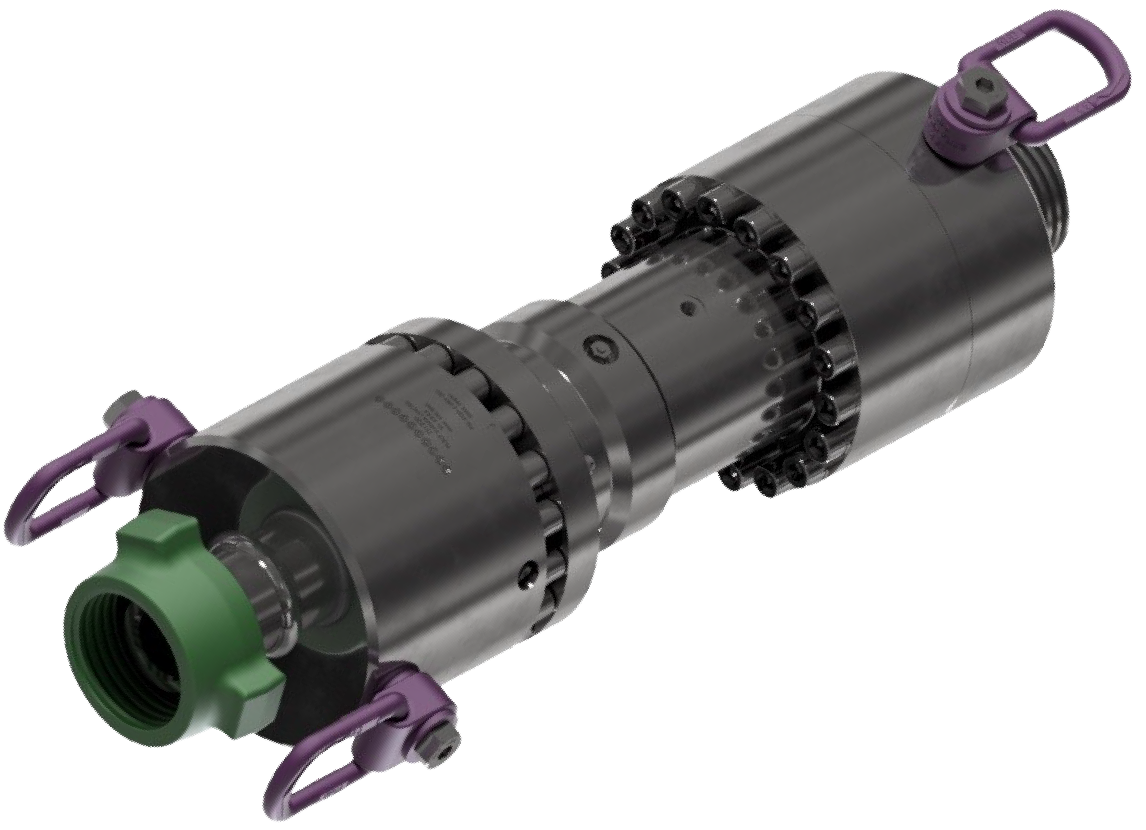
Every one of the Flint Subsea EQDs has an active release port located between the male and female housings. A hydraulic line is plumbed into the release port from either surface or subsea control system.
OPERATIONS
When disconnection is required, fluid is pumped into the connector. This fluid can be water or hydraulic fluid (mineral based or biodegradable). The pressure required depends on the break pin installed in the connector, but is never in excess of 3000 PSI. The maximum volume of oil required depends on the connector size and is given in the table.
With the hydraulic line attached to the release port, the device can still be used in passive mode as long as the system is free to draw in water or air as it is pulled apart. An example of a hydraulic release schematic is shown below. This system uses a pre-charged accumulator to provide the hydraulic power. In the event a disconnection is required, valve V3 is closed and V2 opened. This directs fluid from the accumulator into the EQD and disconnection is initiated.
| Specification | Value |
|---|---|
| Max Hydraulic Pressure (Bar) | 206 (3000 PSI) |
| Maximum Oil Volume Required | 0.25 l |
Download the pdf
WANT TO KNOW MORE? Drop Us a Line.
You may also like
Mid Line Weak Link
The Mid Line Weak Link EQD, used subsea or topside can be mounted into any hose string or below coiled tubing providing protection to infrastructure, personal and the environment for a range of media.